Bhutan is home to two pangolin species: the Critically Endangered Chinese pangolin (Manis pentadactyla) and the Endangered Indian pangolin (Manis crassicaudata). These shy and nocturnal mammals play a crucial role in maintaining our ecosystem by controlling insect populations. Sadly, they are among the most trafficked animals globally and face threats from illegal hunting, wildlife trade, and habitat loss.
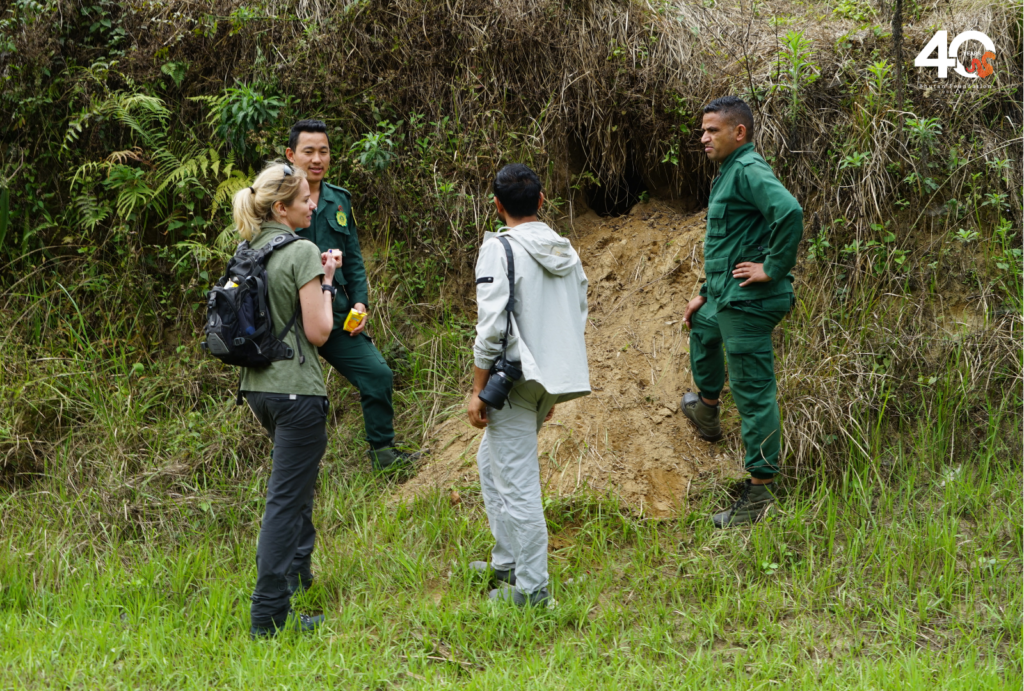
The Bhutan Foundation, in collaboration with the Department of Forests and Park Services under the Ministry of Energy and Natural Resources (MoENR), successfully completed a pilot initiative to understand pangolin distribution, ecology, threats, and conservation needs in Royal Manas National Park (RMNP), while strengthening community participation and institutional capacity for long-term conservation. As one of Bhutan’s first dedicated pangolin conservation initiatives, the project adopted an integrated approach combining camera trapping, burrow surveys, genetic sample collection, acoustic monitoring, and community engagement.
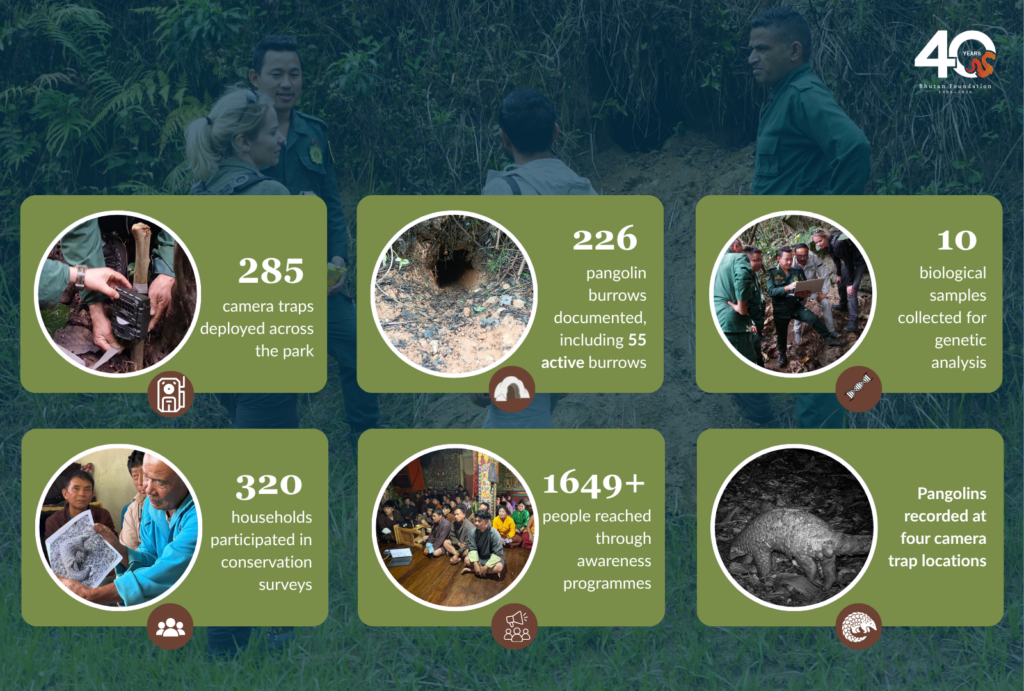
A total of 285 camera traps were installed across a 1 × 1 km grid, 101 sampling sites were surveyed for burrows and habitat, and 320 households participated in a Knowledge, Attitude, and Practice (KAP) survey. The project recorded the presence of Chinese and Indian pangolins at four camera stations and documented 226 burrows, including 55 active and 149 old burrows, comprising 106 living burrows and 99 feeding burrows. Most burrows (68.1%) were recorded in natural forests, followed by agroforestry areas (17.3%).

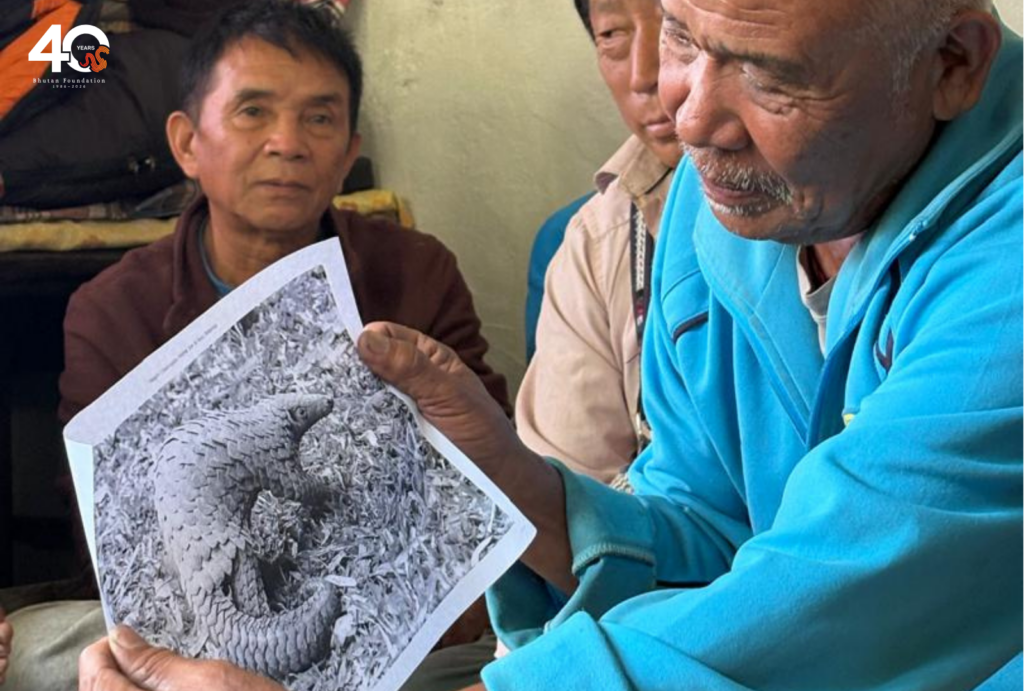
Seven AudioMoth recorders detected no confirmed pangolin calls, although AudioMoth recorders and 10 camera traps remained deployed in the field for continued monitoring. Ten biological samples were collected for genetic analysis. The KAP survey found that 69% of respondents supported pangolin conservation, while awareness programmes reached more than 1,649 people. The project also strengthened the capacity of frontline rangers and established the first comprehensive baseline data to guide long-term pangolin conservation and support the integration of pangolin conservation measures into Royal Manas National Park’s broader conservation management programmes.
This initiative was supported by the Pangolin Crisis Fund, Wildlife Conservation Network through the Bhutan Foundation.