
January 29, 2026
“I never thought fallen leaves could change our lives.”
Phurpa Dorji, 43, stands in Langchenphug Gewog, a remote community in southern Bhutan where areca nut palms grow in abundance. Once an electrician, Phurpa is now a RYPME (Rural Youth Project Management Enterprise) member leader of the Samjong Cooperative Initiative, representing Langchenphug Gewog. Through Samjong, he works with farmers and community members to turn overlooked local resources into sustainable livelihood opportunities.
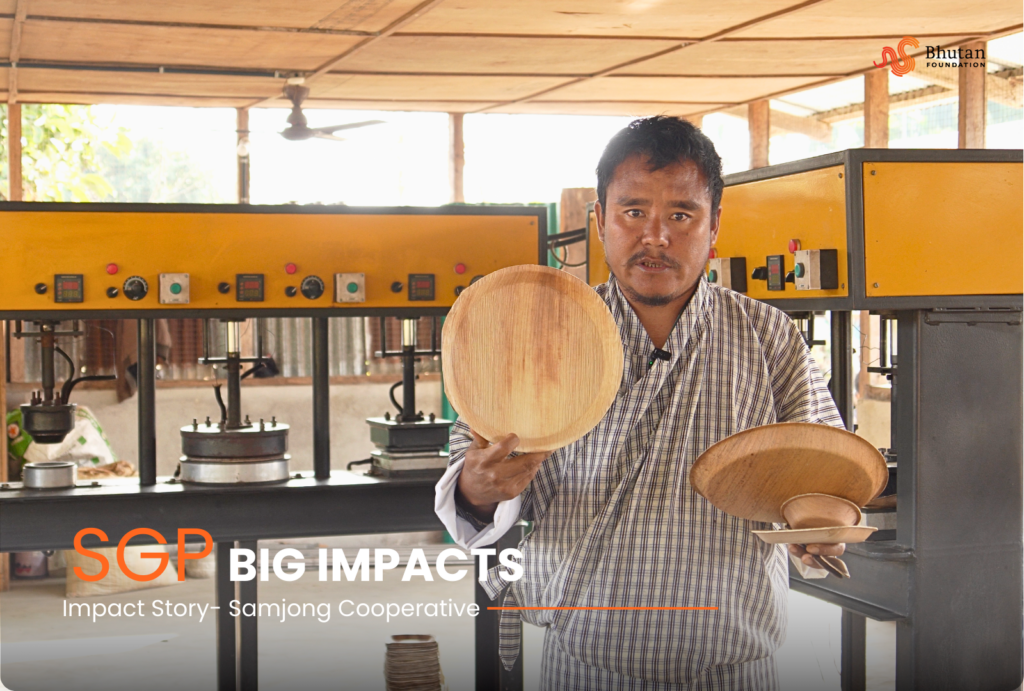
Although areca nut leaf compressing machines had been available in the gewog before the COVID-19 pandemic, they remained unused until two years ago. With encouragement from the Gewog Administration and support through the Samjong Cooperative, Phurpa and his group began producing plates, bowls, and mugs from fallen areca nut leaves, materials that were previously discarded.
“The fruit of the areca nut takes almost ten years,” Phurpa explains. “But the leaves grow much faster. That means people don’t have to wait long to earn.” Villagers soon began collecting and selling the leaves, creating income while maintaining environmental sustainability. A healthy areca nut palm sheds several leaves each year, ensuring a steady and renewable supply of raw materials.
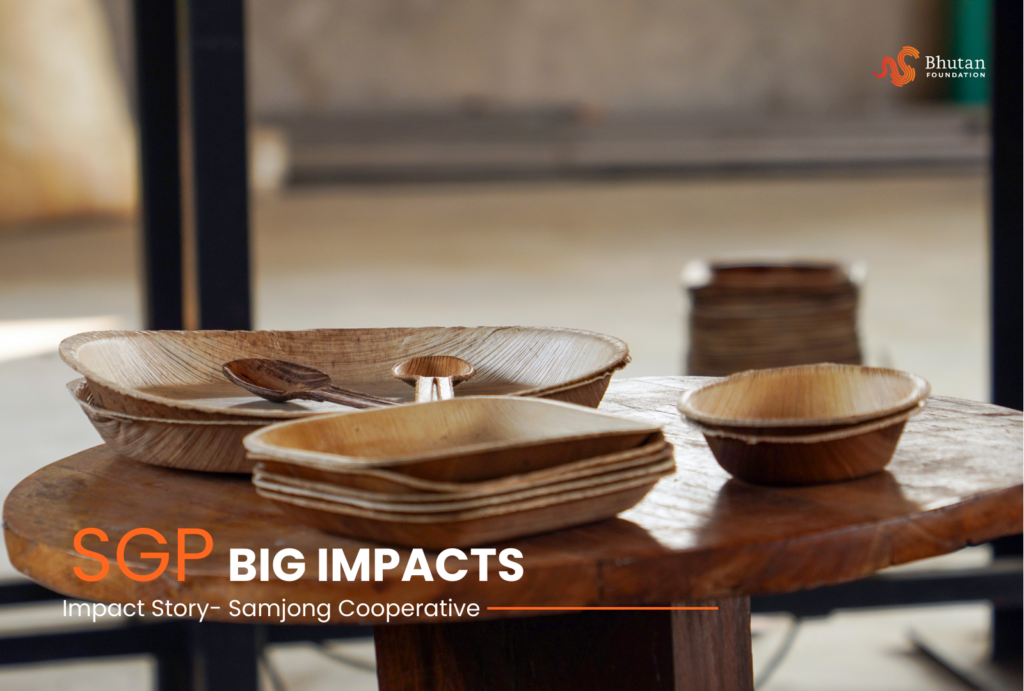
Langchenphug’s role within Samjong expanded further with the introduction of turmeric powder and moringa tea. Turmeric is washed, chipped, dried, and ground locally, and demand has grown steadily. “Our turmeric is doing well in the market,” Phurpa shares. “Even farmers from across the Indian border come to us asking how we grow it.”
Despite the quality of the products, market access was initially limited. Products were selling slowly, and consumers often questioned their price. This changed when Bhutan Foundation, through its Small Grants Program (SGP), supported the rebranding of Samjong’s products. Improved packaging and a unified brand identity repositioned the products as premium and market-ready.
“After the rebranding, everything changed,” Phurpa says. “People began to trust the product and its value.”
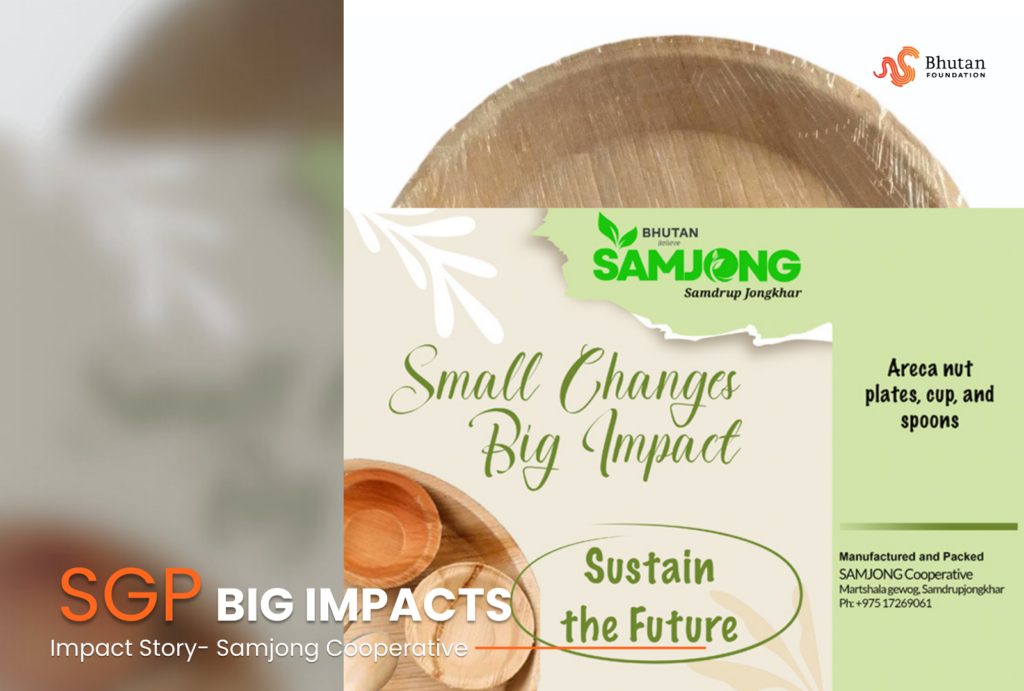
The impact became visible through expanded market reach. Samjong supplied eco-friendly plates to the Haa Quinoa Festival last year and additionally delivered about 10,000 plates for the 118th National Day celebration in Bumthang, marking a major milestone for the cooperative and for Langchenphug’s contribution to Samjong.
The cooperative’s impact extends beyond production. Aum Norbu Lham, 67, is one of the community members who supply areca nut leaves to the Samjong group. “Before, these leaves were just waste,” she says. “Now they help me support my family.” As the sole earner in her household, the additional income has been meaningful. With 16 rebranded Samjong products set for inauguration, the cooperative is entering a new phase of growth. Phurpa’s journey reflects what collective effort and targeted investment can unlock: livelihoods rooted in local resources, stronger community confidence, and the belief that opportunity can grow even in Bhutan’s most remote villages.