
February 13, 2026
In Chhumig Gewog of Bumthang, a high-altitude region known for sheep rearing and seasonal Cordyceps collection, livelihoods depend heavily on agriculture and livestock. For 15 women farmers from Zhangye, Gaytsa, and Phurjoen villages, beekeeping has long been part of that landscape. But until recently, it followed traditional methods that were labor-intensive and limited.
Harvesting honey required opening wooden hives, using heavy smoke, and manually removing and crushing combs. The process was physically demanding, disruptive to the bee colonies, and time-consuming. Yields were modest, and managing hives required significant effort.
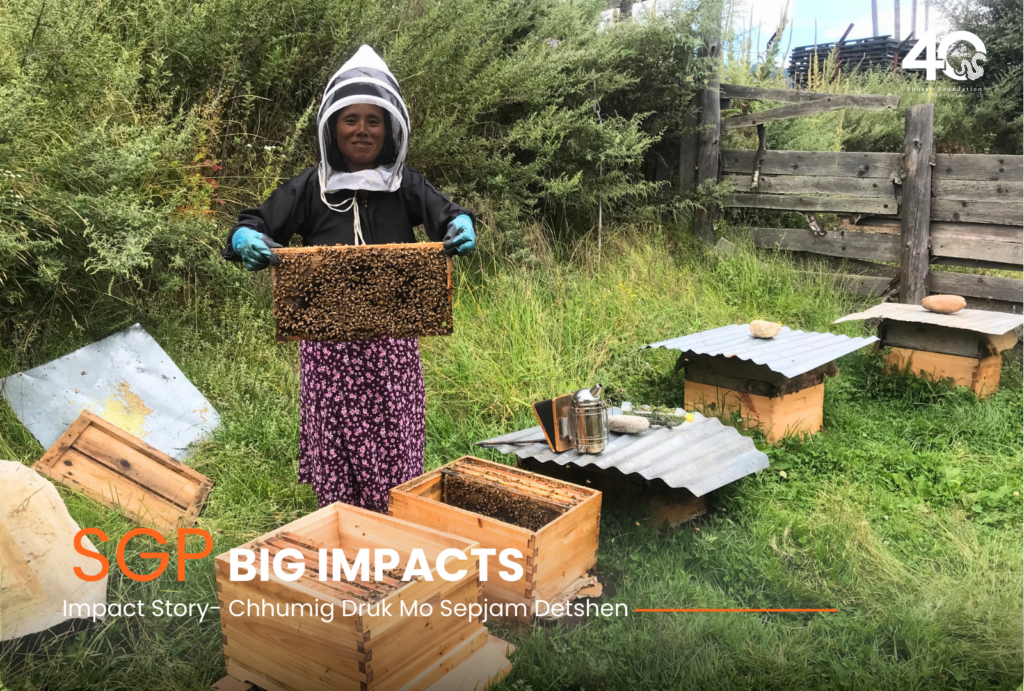
Through the Small Grants Program, the group has now transitioned to modern flow hives, PET feeding systems, and nuc boxes, along with essential equipment such as electric smokers, bee suits, and hive tools. Procurement and installation have been completed, and the group has already harvested honey once using the new system before winter set in.
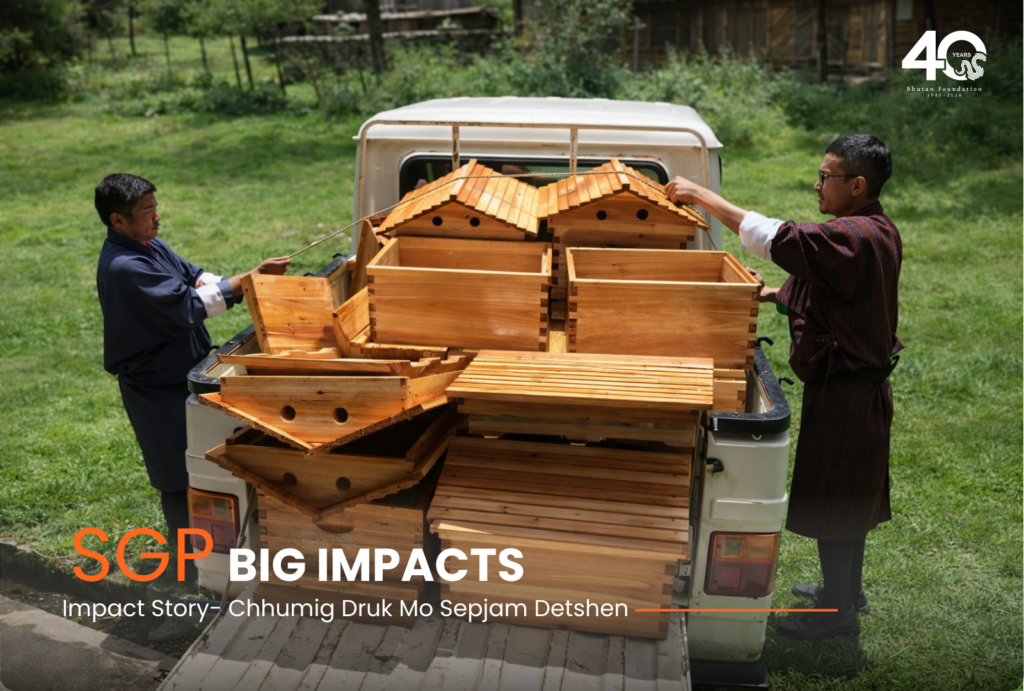
Unlike traditional extraction, the flow hive system allows honey to be collected directly from the hive without dismantling it. This reduces disturbance to the colony, minimizes labor, and makes harvesting safer and more efficient. For women who balance farming, livestock, and household responsibilities, this shift is significant.
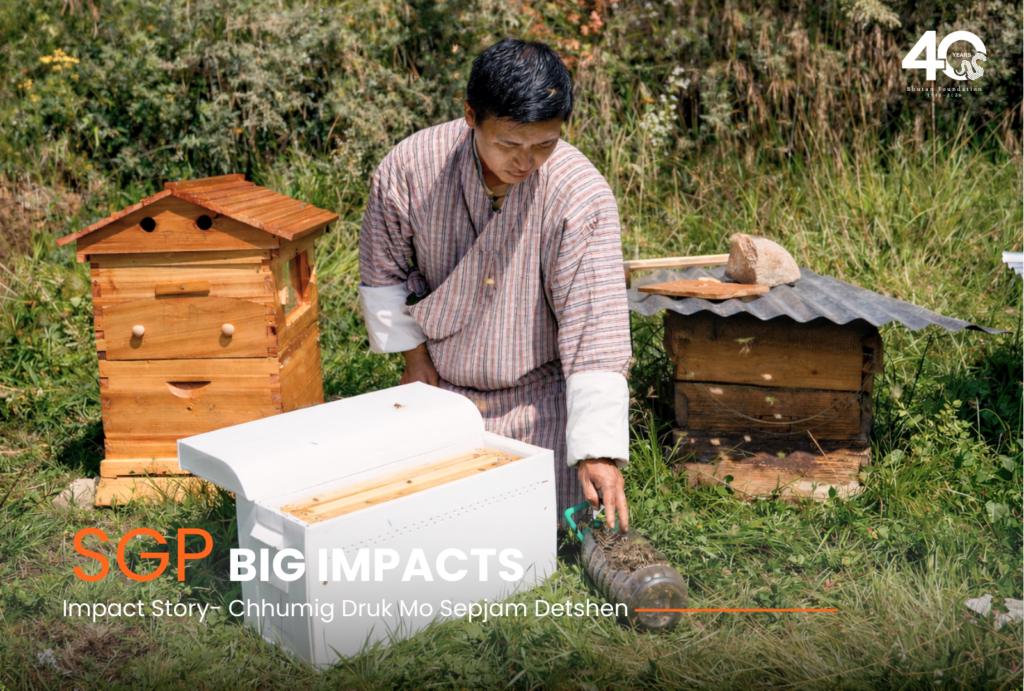
“This will make the work much easier for our women beekeepers and set a new standard for how we manage our hives in the future,” says Mr. Passang Wangdi, the project’s technical focal person from Chhumig RNR Sector.
The initiative represents more than equipment distribution. It marks a shift from subsistence-style beekeeping toward a more structured, technology-driven approach. As the next harvesting season approaches, the group stands at the beginning of a new chapter, one where traditional knowledge is strengthened by modern tools, and rural production moves steadily toward greater efficiency and sustainability.